Showing posts with label book review. Show all posts

Thursday, December 03, 2009

andrew versus evil foes of mccarthy's the road, part IV

please see "andrew versus evil foes of mccarthy's the road, part I" for a full introduction to my defense of the road, including a chat with evil person on facebook #1, wherein i conclusively demonstrate that the road's lack of quotation marks is perhaps a good thing. and see part I for a chat with evil person on facebook #2, wherein i conclusively demonstrate that the horror of the road is not something to avoid on the basis of fear or morality, and part III, wherein i conclusively demonstrate to evil person facebook #3 that to whatever degree the road is repetitive, that is actually a good thing.

xoxoxoxoxoxo

abbreviated introduction: when a friend posted a facebook comment that challenged the magnificence of cormac mccarthy's the road--which is now playing in a movie theater near you!--i couldn't help but respond. the following defense is adapted from that conversation. where necessary, i have taken the liberty of modifying the arguments of those who would dare question the road into straw-men caricatures of their former selves so that they are more easily vanquished.

evil person on facebook #3: [enters room with his arms outstretched, shouting to all who will listen] my children, my children. i tell you the truth, dark tomes have rained down on us in these last days, black books sent down by oprah herself, books that tell of a coming doom, books that preach a relentless gospel of death, destruction, apocalypse. guard your hearts, steal your souls, arm your children--there is no redemption here; there is no light, no sign of hope. nothing but ash, ash, ash. oh, orphans of mother earth--

andrew, self-appointed defender of the road: hi, there.

evil person on facebook #3: oh, hi.

andrew, self-appointed defender of the road: so, you have some kind of a problem with the road?

evil person on facebook #3: right, like i was saying, a great darkness has settled on the pages of the earth, casting unnatural shadows, as from some ominous pit of doom, some demon lair, some hopeless cavern of death and ash--ash everywhere--and in those three letters there is no redemption, no hope; there is--

andrew, self-appointed defender of the road: OK, stop, stop. i get that the road is dark, but don't you think there's at least a glimmer of hope there? something besides depressing darkness?

evil person on facebook #3: if by hope, you're referring to the final scene of the book. don't even get me started on how that one scene in no way redeems the horror of the entire work. this book, this road, is the cackling buzzard-breath of the apocalypse, it's the four horsemen and their--

andrew, self-appointed defender of the road: oh, please don't. i won't try to convince you that the last little bit redeems the whole--i don't think there's a happy hollywood ending tacked on to the end--but i might be foolish enough to contend that the entire ash-strewn monstrosity is in some ways redeeming. i might be crazy enough to suggest that it walks a road that's both tragedy and comedy, darkness and light, and that when we drag ourselves to the end, we find something that both redeems and leaves us cold and alone.

evil person on facebook #3: that makes two of us crazies then.

andrew, self-appointed defender of the road: i really think that the relationship between the man and the son--which, incidentally, seems like one of the more moving father-son relationships i've ever read--and the son and the earth, offers redemption. perhaps the goodness and light that the boy brings is bounded by time and evil, perhaps whatever good he accomplishes, however long he survives, is a pittance in a larger story of doom. perhaps the fire he carries is ultimately revealed as absurd, but as the book's title suggests, i think the story we see is properly confined to what we read in the text, not some heated guesswork of how the road views humanity's overall death or suvival. and this story is the incarnation--into great darkness is born a child of innocence and light, a child that inexplicably gives of himself in a culture that's way beyond fending for oneself.

andrew, the 17 point scale blogger: [jumping into the conversation with a quick whispered plug] yes, you said the very same thing a few years ago in a book blurb for image update and right here on this blog!

evil person on facebook #3: i don't know what you've done, but--wow!--i'm starting to feel all warm and fuzzy about the road.

Monday, November 30, 2009

andrew versus evil foes of mccarthy's the road, part III

please see "andrew versus evil foes of mccarthy's the road, part I" for a full introduction to my defense of the road, including a chat with evil person on facebook #1, wherein i conclusively demonstrate that the road's lack of quotation marks is perhaps a good thing. and see part II for a chat with evil person on facebook #2, wherein i conclusively demonstrate that the horror of the road is not something to avoid on the basis of fear or morality.

xoxoxoxoxoxo

abbreviated introduction: when a friend posted a facebook comment that challenged the magnificence of cormac mccarthy's the road--which is now playing in a movie theater near you!--i couldn't help but respond. the following defense is adapted from that conversation. where necessary, i have taken the liberty of modifying the arguments of those who would dare question the road into straw-men caricatures of their former selves so that they are more easily vanquished.

evil person on facebook #3: [watches as evil person on facebook #2 stares up into a non-existent sky, says a few words, and leaves the room; then, a moment later, continues watching as person on facebook #2 walks into the room, looks up in a peaceful, hippie-kind of way, speaks, and then walks out; and then he turns to andrew, about to speak, when person on facebook #2 again enters the room, looks up, offers a words to the room, and exits] it's monotonous. it's as if the plot and dialogue keeps repeating itself

andrew, self-appointed defender of the road: i think she's stuck in some kind of an online time loop. let me see if i can adjust the RSS feed settings--

evil person on facebook #3: no, not her. the road! there's all this ash, and then they can't find food, so the man says to the boy, "OK?" and he replies, "OK." and then there's more ash, and then they still can't find, so again the man says to the boy, "OK?" and he replies, "OK."

andrew, self-appointed defender of the road: well, that seems like a gross oversimplification of the plot. they also have all kinds of encounters with ***OMITTED FOR IMPROPER SPOILER USE*** and ***OMITTED FOR IMPROPER SPOILER USE***. they experience emotional highs and lows; they see all kinds of sites. to say that nothing happens in the road seems altogether false. a mountain of more interesting stuff happens to the man and boy then happens to me in any given year. and, what's more, all those empty, forgotten spaces they explore--each and every one holds a mystery. what happened to these people? did they survive? are our brave heroes about to bump into them on the next page?

evil person on facebook #3: OK, but you get my meaning. there's the same feel to the scenes. it seems like he could have just written one chapter and then wrote something that said, "now read this chapter ten more times."

andrew, self-appointed defender of the road: i guess i can't fire any objective responses back at your criticism of the road's pacing. i can only say that the very thing that bothered you is what makes me celebrate mccarthy. the plot of the road (and the border trilogy and perhaps blood meridian, and even the orchard keeper if the first few pages are any indication) is that a few guys walk down a road (or perhaps they ride horses) and violent (or occasionally generous) stuff happens to them, sometimes the same stuff over and over again. it's life. that's what it would be like to haunt a postapocalypse like the one mccarthy has created. and the way the characters speak? that's what it's really like sometimes in my life, so i can only imagine that when things get serious, like in the road, it seems more than likely that all kinds of verbal communication would be stripped away.

[evil person on facebook #2 enters the room and then leaves for good]

and to me, mccarthy makes this interesting and real in a way that i almost don't want anything else to happen. he seems a master of the quiet and the storm. and in the road, there's just so much tension in the environment that to me it didn't matter if nothing or the same thing happened, because mccarthy created a world where i was always thinking of what could happen next.

Friday, November 27, 2009

andrew versus evil foes of mccarthy's the road, part II

please see "andrew versus evil foes of mccarthy's the road, part I" for a full introduction to my defense of the road, including a chat with evil person on facebook #1, wherein i conclusively demonstrate that the road's lack of quotation marks is perhaps a good thing.

xoxoxoxoxoxo

abbreviated introduction: when a friend posted a facebook comment that challenged the magnificence of cormac mccarthy's the road--which is being released this week to a theater near you!--i couldn't help but respond. the following defense is adapted from that conversation. where necessary, i have taken the liberty of modifying the arguments of those who would dare question the road into straw-men caricatures of their former selves so that they are more easily vanquished.

person on facebook #2: [holding back a sob as she watches evil person on facebook #1 happily prance out of the room with a copy of the road held tightly to her chest] oh, my. i just can't--

andrew, self-appointed defender of the road: [handing person on facebook #2 a tissue] what's wrong?

person on facebook #2: [wiping a tear] it's this book. the prose is beautiful, but it's so gruesome. i can't get the images out of my head. i can't sleep--

andrew, self-appointed defender of the road: [with an understanding nod] the road is something of a nightmare. i think you have a valid subjective objection.

[someone in the room snickers at this faux-academic, robotic sounding attempt at empathy]

person on facebook #2: [turns evil]

andrew, self-appointed defender of the road: errr...person on facebook #2? are you OK?

evil person on facebook #2: [laughs maniacally] so i get something like a free pass, then? i may universally dismiss the road and all other literature that disturbs? after all, the beauty of the road would be so much greater if it weren't spoiled by the violence and cruelty and b-l-o-o-o-o-d--

andrew, self-appointed defender of the road: [backing away ever so slightly] well, given that the road is causing you emotional stress and prohibiting you from sleeping at night, then, yes, you might want to stay away. but i don't think it's a good habit to universally avoid things that disturb, that make us consider the darker side of ourselves. many people read books to get away from reality, to escape. that's perhaps why the sale of romances and sci-fi books is recession proof whereas literary fiction is gasping for a profit. but i don't think this is necessarily healthy. in fact, i think that good art, books like the road, depict violence and horror. they may be profane. they may be explicit. they challenge us, make us think, force us to question ourselves and how we perceive our neighbors, even scare us. and the fact, that mccarthy's images stay with you is simply a testament to his talent as a writer. the road should stay with you...

[the smoke from some psychadelic pipe begins to fill the room, obscuring the walls and features of the room. the floor slips away, and it is as if the self-appointed defender of the road and the evil person on facebook #2 are floating in space, surrounded only by rising, ever-widening rings of remembrance]

evil person on facebook #2: gnarly!

andrew, self-appointed defender of the road: for weeks, months, i suppose years, after i first read the road i couldn't stop thinking about where i fit into this shadowy humanity. i'd be in church--

[out of nowhere, a church appears in the distance, floating statically above them, its cross pulsating with bright green light]

--and pastor richard's sermon would trigger some thought of the road. or i'd be scoping out the nasty lunch options at work--

[the cross blinks once more, and then is gone, replaced by filipinos in hairnets and a line of vietnam vets, shifting from foot to foot as they wait for the caregiver's special, a mysterious meat dish, at the VA cafeteria]

--and remember how the man and the boy would celebrate over a rotten apple, a can of soup. this, the way mccarthy's images are seared into your mind, is what i love about the road.

Tuesday, November 24, 2009

andrew versus evil foes of mccarthy's the road, part I

in my last 17 point scale post, i described the evolution of andrew the counterintuitive apologetic. i portrayed myself as a noble knight of truth, dashing about the interweb correcting false impressions, even when the matter at hand was of no relevance to or even contrary to my own beliefs. i examined how these magnanimous traits led me (though perhaps circuitously) to publish a book that looks at atheism from a completely new perspective, that of the christian who seeks to dialogue with atheism rather than destroy atheism, the christian who seeks to learn rather than obliterate.

you should buy that book, "god is dead" and i don't feel so good myself
, and while you're at it, this one too--jesus girls: true tales of growing up female and evangelical! but now i'd like to introduce a bit of realism to that perspective.

i really do see myself as someone who questions positions from all sides of the fence, who in trying to stay objective, often finds himself at odds with people on every side. but that doesn't mean i'm coming from position nowhere, that i only fight for issues where i function as a blank slate. no, i'm also quite happy to play the apologetic for those things that i love.

and so, when a friend posted a facebook comment that challenged the magnificence of cormac mccarthy's
the road--which is being released this week to a theater near you!--i couldn't help but respond. the following defense is adapted from that conversation. where necessary, i have taken the liberty of modifying the arguments of those who would dare question the road into straw-men caricatures of their former selves so that they are more easily vanquished.

evil person on facebook #1: [storms into the room brandishing strunk's elements of style like a sword] how can i read this drivel? [stabbing at an imaginary copy of our beloved pulitzer-prize winner] there's no punctuation. there are no semicolons, hardly ever a colon, and no quotation marks in sight. how am i supposed to know who's talking?

andrew, self-appointed defender of the road: [nodding judiciously] yes, i can understand your frustration. mccarthy's punctuation style can be off-putting. and at first it may take a bit of work to negotiate who says what or even who says what when. but perhaps that extra dose of concentration is actually a good thing.

[
backing away from the sharp edges of strunk and white] i'm actually rather curious if, back when mccarthy was poor, his editor, albert erskine, ever pointed this out to him, ever said, "you know, cormac, there's these things called quotation marks, and if you use them, more readers might buy your book."

but i doubt it--it's really not that unique. lots of literary writers dispense with quotation marks and the like. last month, for example, i read
all the living by c. e. morgan, a young writer on the national book foundation's shortlist for important upcoming authors, and she framed her dialogue in exactly the same way.

cormac mccarthy: [sitting in the corner, legs crossed, speaking to oprah via wikipedia about how, "I] prefer declarative sentences.

evil person on facebook #1: wait, who's that? where did he come from?

andrew, self-appointed defender of the road: oh, don't worry, that's cormac. he usually doesn't like speaking to us literary types, but hold on, i think he's saying something about how he shuns quotation marks and the like because he sees no reason to--

cormac mccarthy: --block the page up with weird little marks.

[
cormac fades back into the internet]

andrew, self-appointed defender of the road: [turning back to the bewildered evil thinker] it may seem strange to sacrifice some measure of readability for the sake of aesthetics, but i really think there's something to cormac's claim. limiting punctuation really does in some minute sense put our focus back on the words, on what's really beings said. perhaps there's something more authentic about it, just like when, in the border trilogy, mccarthy slips into spanish. i can't read more than three words of spanish, and so i might miss out on some sense of what's really happening, but it's more real.

andrew, the 17 point scale blogger: [jumping into the conversation with a quick whispered plug] junot diaz, who we reviewed earlier this month on the blog, does the exact same thing with spanish in his pulitzer-prize winning first novel, the brief wondrous life of oscar wao.

andrew, self-appointed defender of the road: thanks, andrew. [now speaking in his best historian voice] and at least in our current age, i think most writers and editors, the elites who in some way or another, at least until the digital age changes publishing as we know it, decide what we experience as writing, agree. we've entered a period--not a quotation mark!--of what's known as down-style, a time where nearly every style guide encourages the limited use of commas, a time where hilarious websites like http://www.unnecessaryquotes.com/ make fun of the over and incorrect use of scare quotes. and so i guess all i can say is that if you want to read literary writing--i.e., good writing--you'd best get used to it.


stay tuned for parts II, III, and IV.

Sunday, November 15, 2009

if i were discussing this book: the brief wondrous life of oscar wao

i'm hesitant to mark my return to the 17 point scale flash-book reviews (pretend that's an n-dash) by examining junot diaz's the brief wondrous life of oscar wao--the book jacket includes quotes from famous publications that pretty much nail my every thought on the book. it's "extraordinarily vibrant" (NYT), "hauntingly horrific" (SFC), "deliciously casual" (TBG), and "achingly personal" (LAT). and even beyond the ubiquity of glowing adverb + adjective constructions for oscar, if you pick out nearly any oscar blurb, i think you'll find me nodding along, "yes, yes. he's right. it is a brilliant multigenerational, globally enacted tragicomedy of sex and nerdom, an epic bildungsroman with voice and pizazz!" (T17PS).

but then i remember the point of this series: i'm not attempting reviews. i'm not even attempting to discuss books in any meaningful way. i merely want to give a sense of what i think of books and what i might say if i were forced to pen a thoughtful essay on said books. it's really quite liberating.

which brings me back to my rather common response to
oscar.

a responsible thinker might question whether books like oscar perpetuate latin american stereotypes in the U.S. psyche (my friend dalia, an IU grad student, reminded me of this, which reminded me of this article about roberto bolano in the guardian). or perhaps he might study the sexual ethics and norms in oscar and then contrast those behaviors with the mind-splitting oppression of the dominican republic under trujillo and his "nazgul" minions; that'd be my second choice.

but my essay would focus on that one trait that seems to have made
oscar a universal sensation, the winner of the pulitzer prize for fiction, the national book critics circle award for fiction, time's #1 fiction book, et cetera: voice.

i'd attempt to locate the book in the context of other works throughout the centuries that have successfully combined a literary style (i.e., poetic language, thoughtful plot, full characters) with a not-so literary (and funny!) idiom. that is, diaz combines a sense of the literary--take this, for a random example, "It went up in a flash, like gasoline, like a stupid hope, and if I hadn’t thrown it [the burning wig] in the sink it would have taken my hand. … That was when she slapped at me, when I struck her hand and she snatched it back, like I was the fire"--with hilarious shout outs to contemporary vernacular. in
oscar we read about the One Ring, about Galactus and the Watchmen. we learn of the protagonist's desire to "combine world-class martial artistry with deadly firearms proficiency" and his sister, who unleashed one of the great Street Fighter chain attacks of all time (OK, as essay on violence could work, too).

and so i wonder what other books of fiction might fit in this canon of works that dare to combine the high and low (?) art to humorous and strangely profound effect.

xoxoxoxoxoxo

i'm leaning toward a 13/17 rating, which makes oscar a 17 point scale recommended title, unless you prefer to avoid titles with copious amounts of violence, profanity, and sex. after all, if you condense this story to the simplicity of its most central device, it really is nothing more than the story of its protagonist's quest to lose his virginity.

you can purchase oscar here.

i'm also tweeting cool passages from the book at #oscarwao.

Tuesday, September 08, 2009

if i were discussing this book: jesus girls


a friend recently emailed me to inquire about my personal thoughts regarding jesus girls (buy the book here!), a book that my friends at cascade books recently published and a book that i helped edit and have been actively marketing on facebook.

i had the sense that she wanted something more than the back-of-the-book blurb (which is actually quite good and rather apropos to the book) or the glowing publisher's weekly review, and so i attempted to avoid pure promotional speak. i don't know that i succeeded, but here's what i said:

Personally, this is the coolest project I've ever worked on. To some extent, editing psychiatric genetic research is rewarding, because some of the things I work on may help lead to a cure or otherwise improve people's lives. That's pretty cool, but the writing itself is dry and makes no attempt to create meaning for readers. My work at THE OTHER JOURNAL is much more interesting--I get to edit theology essays, social justice articles, and poems; I get to work on writing that speaks truth to people's lives.

But JESUS GIRLS moves beyond those mediums (well, perhaps not poetry, but that's another story). JG is a collection of what you might call creative nonfiction or personal essays. Like good fiction, these essays creatively propel readers to an unconscious empathy, to see the world from someone else's shoes, and perhaps to reconsider our own lives. I've wanted to work with creative nonfiction (and novels) for a long time, so helping Hannah (the book's primary editor) edit these essays has been a very fulfilling experience.

Now, more particularly, as its title suggests, JG is a collection of reflections about growing up evangelical. What's unique about JG--and I can imagine this turning some readers off--is that it's not your typical account of growing up evangelical. That is, if you go to a Christian bookstore, you'll probably find books that closely follow the lost-and-then-found formula of conversion; if you go to a secular bookstore, you'll probably find books that blame their evangelical childhood for all of their problems as an adult. Instead, JG gathers essays from women who are still evangelical, women who now belong to other Christian denominations, and women who no longer consider themselves Christians. And so JG aims to be authentic and honest about Christian culture, about the struggles, rewards of faith, and about real-life experiences in the church.

You asked what I think about the book, and I'm guessing that you're curious about more than my biased opinion that the essays are very powerful and well-written--as an evangelical, I think it's important that we read and write this kind of literature, that we avoid sugarcoating the truth or parading a testimony that isn't really our own, that we ask the important questions JG suggests. I think it's important that we acknowledge that our church is both broken and beautiful, and that we take the liberty to honestly consider these things. JG does these things, and this may strike some as Christianity-negative, but I definitely don't see it that way.

I'm excited that you might buy the book, and I'd love to hear what you think of it.

Andrew

to learn more about jesus girls, come to our launch party this thursday! MHGS, 2501 Elliot Ave, Seattle, WA, from 7PM to 10PM--free food, drinks, and readings (including sara zarr and hannah notess!).

Friday, November 14, 2008

if i were discussing this book: the shipping news

the shipping news deserves a high rating; perhaps a 14 or 15 on the 17 point scale. unfortunately, i moved on to the next book before really gathering my thoughts, and so the the authentic-seeming wacky characters (with names like quoyle and wavey) have faded into the thick newfoundland fog where i last left them.

still, if i were to scratch out an essay from the cobwebbed corners of my mind, i think i might approach the novel from the perspective of an editor. (quite a shock, eh!) as i recall, annie proulx's style is somewhat unconventional: she somehow gets away with fragments. sentence shreds. and her characters, the madcap way they talk on and on about knots and the hulls of frigates--pages and pages of dialect about nothing, about nothing but getting to know the characters themselves. anyway, i think i'd try to articulate how this works and doesn't work; i'd try to understand whether this unique writing style somehow reflects the themes of
the shipping news or whether it's a way of speaking that proulx carries with her everywhere she goes; and then i'd recommend the book, because, well, it's really quite good.

Thursday, December 27, 2007

back page: blood meridian or the evening redness in the west

xii.

blood meridian or the evening redness in the west by cormac mccarthy**

12/27/07
according to bauercount.com, jack bauer, the protagonist of 24, has killed 185 people over the course of six seasons. yet the glanton gang of mccarthy's blood meridian could teach bauer some things about killing; they eclipse this feat without the benefit of automatic weapons, and because mccarthy writes so matter-of-factly of violence and brutality (not because of the sheer number of murders), these indian scalpers make bauer seem like a harmless saint nick. biblical commentators speak of the earth groaning as it awaits the expulsion of darkness, and no novel offers a grimmer account of the pulsing menace of humanity (and our complicity with satan and, for that matter, nature) than blood meridian (not even the road). read it if you dare.

14 out of 17*

*the 17 point scale panel of experts--andrew, andrew, andrew, andrew, andrew, andrew, andrew, andrew, andrew, andrew, andrew, andrew, andrew, andrew, andrew, andrew, and, yes, andrew--rated blood meridian between 13 and 16 and have yet to formally declare their rating tried and true. they still have some thinking to do.

**i think the cormac mccarthy lemonade is flooding hollywood. i just read that ridley scott will be directing blood meridian. i can't imagine how this could be filmed tastefully yet with profundity. do dark, dark, bloody epics translate well to film?

Tuesday, September 25, 2007

my maytrees blurb

here's my blurb from the latest edition of image update:

the maytrees by annie dillard

Reading Annie Dillard’s second novel, The Maytrees, is like taking a stroll through the dunes of Cape Cod, shoeless and pensive, the sea “a monster with lace hem” beside you, and then happening upon a weathered stone or a gleaming pearl in the sand, nudging it with your foot, and sifting the salty grains through your toes as you unbury the unseen. The Maytrees moves at this same careful pace. Dillard’s practiced eye observes the love of two protagonists, Maytree and Lou, unfolding and refolding it thought by thought, again and again. Although The Maytrees explores themes of grace, aging, and nature, it is best characterized as an unabashed love story: two New Englanders marry and find themselves forever wondering what love is. Dillard, undaunted by the long line of love stories that have scoured the genre of its obvious metaphors, writes like a patient beachcomber bent on discovering her own unique treasure in the sand. With her characteristic sense of humor, Dillard encounters the mystery of love with a handful of surprising and poetic images, from Aztec priests to sinking ships. And her characters explicitly ponder the strange paradox of love, the ridiculous notion that we care “wildly, then deeply, for one person out of billions,” that we bind “ourselves to the fickle, changing, and dying as if they were rock.” But ultimately, as Toby Maytree struggles to realize, “reason never trafficked in a man’s love life,” and it is “only in the face of the other” that we each find home.

some of you may frown at the strange opening to this blurb, but i really like it. it feels like poetry to me, and no matter what you might say, i think it works. i'm still thinking about the rating for this one. somewhere between a 9 and a 12.

Sunday, July 01, 2007

back page: an american tragedy

xi.
an american tragedy by theodore dreiser

5/1/2007
let me quote you from my edition's afterword: "the action of the novel moves like a series of waves, each surging forward to a peak of tension and receding into quietness, and each, after the first one, reenacting in a more complex and perilous fashion the material of its predecessor."

i heartily agree, but while iriving howe suggests that the gathering storm of dreiser's prose is something to be admired, i think i'd rather stay ashore. an american tragedy pounds the reader with wave after wave of its protagonists indiscretions. eight hundred fourteen pages of boring breakers. can someone please call an editor? dreiser's relentless descriptions of the blindly selfish age in which he lived make one tired. for those that survive the deluge, the novel concludes with an interesting collision between faith and conscience. ultimately, i'd say this is the kind of book that inane teachers will assign to their unfortunate students, forever spoiling the next generation's opportunity to appreciate great literature.

6 out of 17


andrew david. "dreiser won't save you, grab the rope!" crescent bar, wa.

Tuesday, June 26, 2007

back page: the master and margarita

x.
the master and margarita by mikhail bulgakov
translated by michael glenny

4/12/07
some masterpiece--this book stinks. the master and margarita was the worst experience of my recent trip to belize. its fantastical plot reminds me of some of the tales my buddy adam and i wrote in junior high. its funky, disjointed style reminds me of chesterton's the man who was thursday. and its ceaseless chaotic pouncing of immortal crazies on squeamish muscovites reminds me of the sadistic violence of tom and jerry with a slice of greek mythology. i'd like to blame this mess on the translator, but some parts of the book were actually rather good. if you choose to read this book, skip to the creative retellings of the life of jesus, judas, and pilate.

3 out of 17

i should mention that (1) the critics love this book, (2) rebecca the internationally-minded legal counselor-in-training loves this book, and (3) if you don't mind messy senseless plots, people say there's a meaningful satire here.


andrew david. "the wise mennonite grinds the master and margarita into the hard grassy slope." san ignacio town, belize.

Saturday, June 16, 2007

my culturally savvy christian blurb and some words on poetry

the june 15 issue of imageupdate includes the s.o.'s reviews of sandra scofield's the scene book and michael mott's the world of richard dadd.

in addition to noting that she's reviewing two books, not one, i'd like to emphasize that mott's book is poetry. indeed, i'm particularly impressed when a fellow non-poet like the s.o. can pull that off. yes, i was an english major; i have scanned and explicated my share of strange poems, and i do all right in the comprehension department, but reviewing the stuff is beyond me. i feel rather inadequate when it comes to comparing the quality of one poem to another. i suppose prose is just my thang.

why all this attention to imageupdate? well, i also contributed to the latest issue, and it went something like this:

The Culturally Savvy Christian: A Manifesto for Deepening Faith and Enriching Popular Culture in an Age of Christianity-Lite by Dick Staub
Image
There’s a good chance that the writer and social commentator Dick Staub is a secret apologist for Image. His newest book, The Culturally Savvy Christian, closely parallels Image’s underlying mission: it vigorously challenges readers to discern rather than idly consume, and more importantly, to nourish the contemporary culture rather than becoming pop culture clones. As the past host of a syndicated radio program, Staub has mastered the art of pairing people with ideas and watching them take off. This talent makes The Culturally Savvy Christian a particularly intriguing read: Staub collects facts and voices from sociology, theology, and pop culture and fits them into an insightful conversation about the devolution of culture and evangelicalism. He contends that most Christians, even those who travel in exclusively Christian circles, have been wooed by the forces of marketing and technology and have thereby fallen into an unconscious illicit union with superficiality and sentimentality. Staub dubs this blind self-centeredness Christianity-Lite, and he believes that to avoid a quiet backslide into mediocrity, we must get serious with our faith, sink deeper into the Word, and react to the world with intelligence and creativity. Some Christians bemoan culture’s vulgarities and believe that deepening faith requires us to withdraw into cocoons of Christian isolation and churn out happy-feely Christian art, but Staub warns us that this is not the way of Christ. Instead, he explains that like CS Lewis, JRR Tolkien, and Dostoevsky, “Christian artists are not bound to create religious art, but they understand that their exploration of everyday human occurrences is gilded by their walk in faith.” The Culturally Savvy Christian encourages us to peer through the pop culture fog, dismiss the fluff, and reach for the life-changing, the thoughtful, and the meaningful.
let me know if you want any more feedback about the book. i'd give it a 10 out of 17.

despite staub's criticism of marketing, i think his book succumbs to two marketing ploys: (1) every five paragraphs or so, he has a new section. this makes the text easy to digest, but it's a cheap writing technique. (2) staub loves to watchwords. he picks adjectives that seem heavy and laden with meaning and then he uses them again and again.

still, although i skimmed the meaty middle of the book, the culturaly savvy christian certainly succeeds in its overaching goal. it is an insightful depiction of the emergence and cure for christianity-lite.

Thursday, March 01, 2007

my twilight innings blurb

Twilight Innings by Robert A. Fink
The poet Robert A. Fink begins his first collection of personal essays as a bloody mess. Somewhere on the back roads of his beloved west Texan prairies, Fink’s marathon training is punctuated by a nasty fall. "I'm pathetic," he says. "I suddenly feel as if I'm in a commercial for incontinent older adults." Never mind that at 57, Fink’s 8-minute mile is still faster than most twenty-somethings’. His comic humility is what makes readers at home in Fink’s stories; we cozy up beside him in his favorite seat, four rows back from home plate, and enjoy the view. As one might suspect, Fink sometimes uses baseball as a unifying theme for his essays, but Twilight Innings is hardly an anthology of fresh-cut grass and blooper anecdotes. As the poet-professor slips back and forth between the pitcher’s mound and his university classroom, he also shares stories of suffering: a master sergeant trembles in a dark corner somewhere in Vietnam, two of his friends struggle with terminal cancer, 141 women jump from the 8th floor windows of a shirtwaist factory. There is a long winter of pain in Fink’s twenty-four essays, but they still manage to communicate hope and healing, preserving a sense of humor and hard-won wisdom.

Look for Robert Fink’s essay, “Pilgrims,” in the upcoming issue of Image, issue #53.

To buy Twilight Innings, click here.

that was from my blurb in imageupdate. if i had the space, energy, and creativity i would have also mentioned that fink's collection includes a telling story called "the schizophrenic creative writing teacher." the narrative describes fink's two-faced existence as an english prof: he is both drill sergeant and consoling counselor (a skill that he must pick up from his wife, who we later learn happens to be a "counselor of the year"). (incidentally, i question fink's use of schizophrenic. what he really means is multiple personality disorderish, but unfortunately, dictionaries still include "a state characterized by the coexistence of contradictory or incompatible elements." isn't that a little like saying gay to mean lame...errrr...that is, to mean bad?) but in my opinion, this essay is a microcosm of the entire collection. during the course of his personal essays, we also learn that fink is both sensitive poet and manly-man athlete. he volunteers for extra duty in vietnam and cowers during high school reunions. he really is a multiple personality disorder poet.

one reader asked me if i had any criticisms of twilight innings. i rather enjoyed the book and wish that i'd spaced the material out over more than a weekend. still, i wondered at the inclusion of an occasional essay or two that wandered away from narrative and into reflection. i also found it difficult to tease meaning out of some of the stories, but i suppose that's okay.

the reader also asked why there aren't bylines on the blurbs. his hypothesis was that because image is a christian journal they somehow find it self-serving or unchristian to credit authors directly. interesting idea, but i think that's socialism, not christianity! still, he could be right; i'm not sure why imageupdate doesn't include bylines. (perhaps because imageupdate is, after all, a newsletter not a journal.)

Tuesday, January 30, 2007

back page: the brothers k

IX.
the brothers k
by david james duncan

7/22/05
"...maybe i don't like perfect circles...in any case, i apologize for casting a shadow over this otherwise brilliant achievement. after all, i think [that the brothers k is] quite capable of casting its own shadows. david james duncan's characters are crazy extremes, yet he somehow makes them so believable and life-like that their suffering is contagious (beware). duncan also invents new twists to common language (metaphors) that open his world to us in a funny, unique way."

according to my myspace page, the brothers k is my favorite novel. i love it. if you like stories that address issues of faith, philosopy, baseball, the pacific northwest, family, love, politics, nature, war, mental health, or redemption, then you must read the brothers k. now. stop reading this blog; you are wasting time that could be spent reading the brothers k, the best book on the planet.

go forth and read.

andrew david. "river teeth" banff/jasper national park, alberta.
(incidentally, river teeth is a journal of creative nonfiction that is edited by david james duncan.)

Thursday, December 14, 2006

the road (continued)

i'm not sure how much i can trust my statcounter, but it appears that some of you are afraid to click on the imageupdate link (or any link for that matter). therefore, i've decided to include the blurb here. there's a chance that the managing editor of imageupdate may force me to remove it, so read quickly--it may disappear at any moment:

Nothing says “Merry Christmas” quite like Cormac McCarthy’s latest novel, The Road. And we mean that. The Road offers a dark, apocalyptic vision of the future, of a charred, useless land, wasted by an unnamed catastrophe and “peopled with refugees [in] masks and goggles, sitting in their rags by the side of the road like ruined aviators.” McCarthy’s characteristically spare dialogue forges a world that is chilling and austere. And into this “crushing black vacuum of the universe” he thrusts a frightened father and son. They push a battered shopping cart south through the ash-choked air, hoping to escape the winter cold, hoping to find food. In this desolation, language and meaning deteriorate, “the names of things slowly following those things into oblivion… the names of things one believed to be true.” The father walks the road with a pistol tucked in his belt—in this savage land, he is no longer free to do right, only to stay alive. But there may be hope in McCarthy’s darkness, perhaps even a sense of the Incarnation, an inkling of Advent. Despite the desperation of their journey, the son walks in empathy. With an innocence foreign to the blighted earth, this boy cares passionately about right and wrong. At times the father “raise[s] his weeping eyes” to see his son “standing there in the road looking back at him from some unimaginable future, glowing in that waste like a tabernacle.” This child, born into a world gone mad, shines with some greater fire. And that’s what Christmas is all about, Charlie Brown (David par. 2).

Wednesday, December 13, 2006

the road

ah, yes. i'm proud to report that i've published yet another blurb in imageupdate.* and in some respects, the paragraph is even a bit christmasy! if nothing else it's one of a kind; when i googled "advent" or "christmas" in conjunction with cormac mccarthy's recently published the road, i got fewer than one relevant hit. perhaps that's because the road is the darkest, most harrowing book that i've read in the last year. perhaps that's because the only mention of christmas in the novel is when the main character points to a fireplace mantle and shows his son a patchwork of pinholes, explaining that holiday stockings once hung from those holes. in any case, read the road. it's worth the tears. and if nothing else, you can look forward to arguing with me about the presence of a christ-child in mccarthy's post-apocalypse.


andrew david. "the road" mt baker, wa.

(actually, imagine the photo as wayyy more dreary. the picture was taken right outside the lodge that i stayed at during bethany community church's wilderness retreat, and, when in color, it is rather beautiful, so it was rather tough to drain it of it's splendor. just imagine that everything in the photo is dying and covered in ash.)

*the final version will be uploaded thursday morning

Wednesday, November 01, 2006

my writing

this week image update published my sophomore attempt at a book recommendation. it's the one that begins "photographer james walker perry spent six years snapping necks on the mississippi delta preaching circuit...." also, while you're there, check out beth's review of carole graye's poems by denise levertov.

sssssshhhh
andrew david. "a tornado is sleeping in my shirt & an oreo is living in my yurt" blackfeet nation bison reserve, mt.


Saturday, September 16, 2006

in case you haven't noticed...

warning: this post is the kind of thing you might see on myspace.

i have a friend (we'll call him john brawner) who occasionally sends bulletins to his 93 myspace buddies. the topics of john's bulletins range from silly surveys to updates on the state of his myspace page. i find it humorous that he keeps us up to date on the background of his myspace page, but now i'm following suit. i've upgraded to the new beta blogger; this means that some of the links on the left should be easier to navigate, that there's a new label feature at the bottom of each post, and that i'm still unable to post pictures. on the bottom left you will find a list of EVERY label that's been used in the 17 point scale, so if you were interested in finding out more about john brawner, you could simply ctrl-f "john brawner," click on the link, and then see every post where brawner is considered a topic of interest. (if i've used your search term as a label,) this actually works a lot better than the default blog search mechanism at the top of the page.

the other more significant addition to the 17 point scale is a linked list of every book and film that i've experienced since mid-july, 2006. in some ways, this list represents the first fulfillment of the 17 point scale's original design: it uses the infamous 1-17 scale to provide a qualitative rating for each of these works.

Thursday, September 14, 2006

back page: heart of darkness

VIII.
heart of darkness by joseph conrad

8/12/01
"powerful descriptions drive these dark tales into picturesque dead-ins, as i can't manage to grasp the central themes in any meaningful or real way."

one of my favorite schizophrenia researchers is sean meichle. i've heard girls (i.e., kate simpson and kris purganan) refer to sean as metrosexual, but in my book he's a rather typical guy's guy. he's a tennis-shoes and jeans ally in my quest for casual work dress; he's an espn regular and a loyal hawks fan; and he prefers dominoes pizza to that crappy real italian nonsense that they serve you at tuta bella. however, there is one odd thing about sean--he can't handle used books. now this isn't necessarily a feminine trait, but when sean spots an old book he reacts like beth to bugs. the taste, touch, or smell of a used book is enough to make him jump. as a lover of all things cheap (and books), this is tough for me to understand. a used book is a loved book. it's a book with character. and in this sense, i love my books more than most folks. indeed, if you visit my library in greenwood, you will find that i scribble all over my books. even when i'm lost (like the first time i read heart of darkness), i still ink 'em up. anyway, for some strange reason (known as practical crit with chris chaney) back in 2003 i transcribed many of my heart of darkness comments in a Word file. so, thanks to the internet, if you have book ocd like sean, you can now see what it's like to read one of my used books without freaking out. just follow this heart of darkness link.

Sunday, July 30, 2006

back page: play it as it lays

VII.
play it as it lays by joan didion

8/10/03
"a dirty depressing book that makes me sad for those who believe in nothing (or even an erroneous something). if i want to read about nothing, i think i prefer virginia woolf."

there's a chance that didion did intendion a reaction very similar to my 2003 post-script. the moral of the story may very well be "don't be dirty, believe in something, and read virginia woolf"--well, probably not that last part--or you too will play the lead part in some depressing book from the '70s. it's the requiem for a dream approach: make it (drugs, self-centered moral corruption, whatever your poison) look cool and then mercilessly mash your characters into the dark night of reality, twist that thing (drug, corruption, etc) 180 degrees so that it destroys the protagonists and everyone she knows. and do it graphically. then anyone who reads your book, sees your movie, or hears your dream will think, "there's no way i'll ever do that."

there's also a chance that didion was just telling a story, a story that i apparently found hopeless and without merit. i shared a bit of this didion dislike over coffee with an old english professor of mine. dr. reinsma stopped mid-sip and stared. he then steered the conversation to other matters. it was as if he dismissed my dismissal as the lunacy of a sleepy, inattentive reader. still, despite ms. didion's motives or dr. reinsma's dissension (which may very well be a misattribution on my part; perhaps the good old prof had a coffee curd caught in his throat or was world-weary and tired of discussing such depressing books), i still recommend leaving as it lays where it lays. if you spot it in the $1 barrel, leave it there, that's where it belongs.

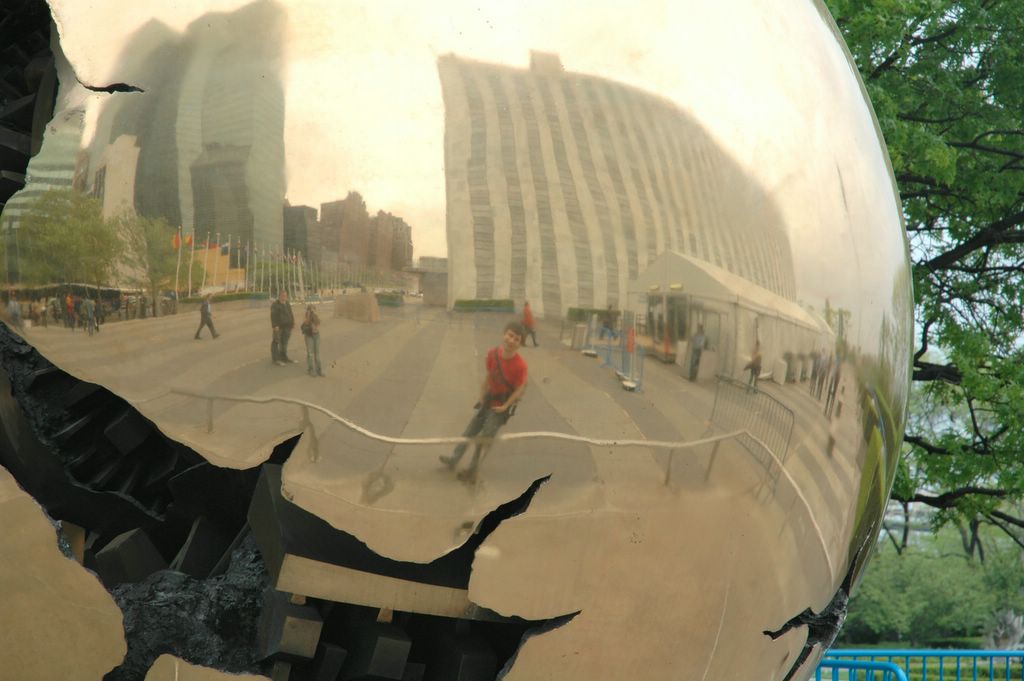
beth the s.o. "the dirty depraved one visits a cracking globe at the united nations" nyc, ny.

by the way, my association between "nothing" and virginia woolf is related to her novel to the lighthouse, in which the book goes on and on and on and on but nothing ever seems to happen. however, i was probably hoping to suggest that the nothingness in va woolf was somehow an acceptable, reading-worthy nothingness.